Stewart Precalc 6e Section 13.4: Limits at Infinity; Limits of Sequences

43 questions

--:--
0 / 43
Stewart Precalc 6e Section 13.4: Limits at Infinity; Limits of Sequences 0/43
1 Concept Check · Level 1
Let \(f\) be a function defined on some interval \((a, \infty)\). Then \(\operatorname*{lim}\limits_{x \rightarrow \infty} f(x) = L\) means that the values of \(f(x)\) can be made arbitrarily close to ___ by taking ___ sufficiently large. In this case the line \(y = L\) is called a ___ of the curve \(y = f(x)\). For example, \(\operatorname*{lim}\limits_{x \rightarrow \infty} \dfrac{1}{x} = \) ___, and the line \(y = \) ___ is a horizontal asymptote.
2 Concept Check · Level 1
A sequence \(a_1, a_2, a_3, ...\) has the limit \(L\) if the \(n\)th term \(a_n\) of the sequence can be made arbitrarily close to ___ by taking \(n\) to be sufficiently ___. If the limit exists, we say that the sequence ___; otherwise, the sequence ___.
3 Limit from Graph · Level 2
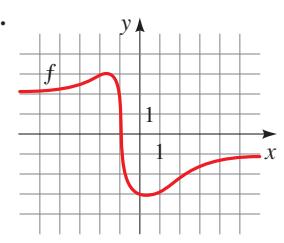
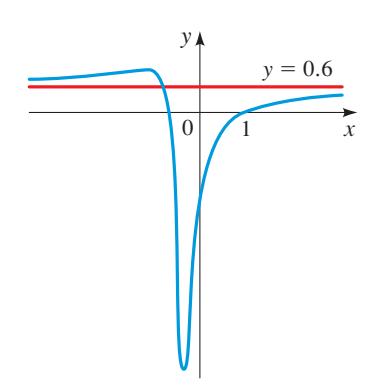
(a) Use the graph of \(f\) to find the following limits: (i) \(\operatorname*{lim}\limits_{x \rightarrow \infty} f(x)\), (ii) \(\operatorname*{lim}\limits_{x \rightarrow -\infty} f(x)\). (b) State the equations of the horizontal asymptotes.
question image
4 Limit from Graph · Level 2
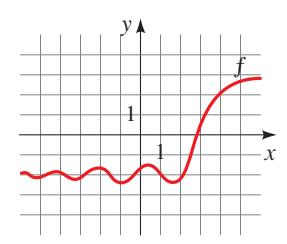
(a) Use the graph of \(f\) to find the following limits: (i) \(\operatorname*{lim}\limits_{x \rightarrow \infty} f(x)\), (ii) \(\operatorname*{lim}\limits_{x \rightarrow -\infty} f(x)\). (b) State the equations of the horizontal asymptotes.
question image
5 Limit Calculation · Level 2
Find the limit: \(\operatorname*{lim}\limits_{x \rightarrow 0} \dfrac{3}{x^4}\).
6 Limit at Infinity · Level 2
Find the limit: \(\operatorname*{lim}\limits_{x \rightarrow \infty} \dfrac{2x + 1}{5x - 1}\).
7 Limit at Infinity · Level 2
Find the limit: \(\operatorname*{lim}\limits_{x \rightarrow \infty} \dfrac{2 - 3x}{4x + 5}\).
8 Limit at Infinity · Level 2
Find the limit: \(\operatorname*{lim}\limits_{x \rightarrow -\infty} \dfrac{4x^2 + 1}{2 + 3x^2}\).
9 Limit at Infinity · Level 2
Find the limit: \(\operatorname*{lim}\limits_{x \rightarrow -\infty} \dfrac{x^2 + 2}{x^3 + x + 1}\).
10 Limit at Infinity · Level 3
Find the limit: \(\operatorname*{lim}\limits_{t \rightarrow \infty} \dfrac{8t^3 + t}{(2t - 1)(2t^2 + 1)}\).
11 Limit at Infinity · Level 3
Find the limit: \(\operatorname*{lim}\limits_{r \rightarrow \infty} \dfrac{4r^3 - r^2}{(r + 1)^3}\).
12 Limit at Infinity · Level 2
Find the limit: \(\operatorname*{lim}\limits_{x \rightarrow \infty} \dfrac{x^4}{1 - x^2 + x^3}\).
13 Limit at Infinity · Level 2
Find the limit: \(\operatorname*{lim}\limits_{t \rightarrow \infty} \left(\dfrac{1}{t} - \dfrac{2t}{t - 1}\right)\).
14 Limit at Infinity · Level 2
Find the limit: \(\operatorname*{lim}\limits_{x \rightarrow -\infty} \left(\dfrac{x - 1}{x + 1} + 6\right)\).
15 Limit at Infinity · Level 2
Find the limit: \(\operatorname*{lim}\limits_{x \rightarrow -\infty} \left(\dfrac{3 - x}{3 + x} - 2\right)\).
16 Limit at Infinity · Level 2
Find the limit: \(\operatorname*{lim}\limits_{x \rightarrow \infty} \cos x\).
17 Limit at Infinity · Level 2
Find the limit: \(\operatorname*{lim}\limits_{x \rightarrow \infty} \sin^2 x\).
18 Limit Estimation · Level 3
Use a table of values to estimate the limit. Then use a graphing device to confirm your result graphically: \(\operatorname*{lim}\limits_{x \rightarrow -\infty} \dfrac{\sqrt{x^2 + 4x}}{4x + 1}\).
19 Limit Estimation · Level 3
Use a table of values to estimate the limit. Then use a graphing device to confirm your result graphically: \(\operatorname*{lim}\limits_{x \rightarrow \infty} (\sqrt{9x^2 + x} - 3x)\).
20 Limit Estimation · Level 3
Use a table of values to estimate the limit. Then use a graphing device to confirm your result graphically: \(\operatorname*{lim}\limits_{x \rightarrow \infty} \dfrac{x^5}{e^x}\).
21 Limit Estimation · Level 4
Use a table of values to estimate the limit. Then use a graphing device to confirm your result graphically: \(\operatorname*{lim}\limits_{x \rightarrow \infty} \left(1 + \dfrac{2}{x}\right)^{3x}\).
22 Limit of a Sequence · Level 2
If the sequence is convergent, find its limit. If it is divergent, explain why: \(a_n = \dfrac{1 + n}{n + n^2}\).
23 Limit of a Sequence · Level 2
If the sequence is convergent, find its limit. If it is divergent, explain why: \(a_n = \dfrac{5n}{n + 5}\).
24 Limit of a Sequence · Level 2
If the sequence is convergent, find its limit. If it is divergent, explain why: \(a_n = \dfrac{n^2}{n + 1}\).
25 Limit of a Sequence · Level 2
If the sequence is convergent, find its limit. If it is divergent, explain why: \(a_n = \dfrac{n - 1}{n^3 + 1}\).
26 Limit of a Sequence · Level 2
If the sequence is convergent, find its limit. If it is divergent, explain why: \(a_n = \dfrac{1}{3^n}\).
27 Limit of a Sequence · Level 2
If the sequence is convergent, find its limit. If it is divergent, explain why: \(a_n = \dfrac{(-1)^n}{n}\).
28 Limit of a Sequence · Level 2
If the sequence is convergent, find its limit. If it is divergent, explain why: \(a_n = \sin\left(\dfrac{n \pi}{2}\right)\).
29 Limit of a Sequence · Level 2
If the sequence is convergent, find its limit. If it is divergent, explain why: \(a_n = \cos(n \pi)\).
30 Limit of a Sequence · Level 3
If the sequence is convergent, find its limit. If it is divergent, explain why: \(a_n = \dfrac{3}{n^2} (\dfrac{n(n + 1)}{2})\).
31 Limit of a Sequence · Level 3
If the sequence is convergent, find its limit. If it is divergent, explain why: \(a_n = \dfrac{5}{n} (n + \dfrac{4}{n} (\dfrac{n(n + 1)}{2}))\).
32 Limit of a Sequence · Level 3
If the sequence is convergent, find its limit. If it is divergent, explain why: \(a_n = \dfrac{24}{n^3} (\dfrac{n(n + 1)(2n + 1)}{6})\).
33 Limit of a Sequence · Level 3
If the sequence is convergent, find its limit. If it is divergent, explain why: \(a_n = \dfrac{12}{n^4} (\dfrac{n(n + 1)}{2})^2\).
34 Applications · Level 3
Salt Concentration. (a) A tank contains \(5000\) L of pure water. Brine that contains \(30\) g of salt per liter of water is pumped into the tank at a rate of \(25\) L/min. Show that the concentration of salt after \(t\) minutes (in grams per liter) is \(C(t) = \dfrac{30 t}{200 + t}\). (b) What happens to the concentration as \(t \rightarrow \infty\)?
35 Applications · Level 3
Velocity of a Raindrop. The downward velocity of a falling raindrop at time \(t\) is modeled by the function \(v(t) = 1.2 (1 - e^{-8.2 t})\). (a) Find the terminal velocity of the raindrop by evaluating \(\operatorname*{lim}\limits_{t \rightarrow \infty} v(t)\). (b) Graph \(v(t)\), and use the graph to estimate how long it takes for the velocity of the raindrop to reach \(99 %\) of its terminal velocity.
36 Discovery · Level 4
The Limit of a Recursive Sequence. (a) A sequence is defined recursively by \(a_1 = 0\) and \(a_{n + 1} = \sqrt{2 + a_n}\). Find the first ten terms of this sequence rounded to eight decimal places. Does this sequence appear to be convergent? If so, guess the value of the limit. (b) Assuming that the sequence in part (a) is convergent, let \(\operatorname*{lim}\limits_{n \rightarrow \infty} a_n = L\). Explain why \(\operatorname*{lim}\limits_{n \rightarrow \infty} a_{n + 1} = L\) also, and therefore \(L = \sqrt{2 + L}\). Solve this equation to find the exact value of \(L\).
37 Example - Limits at Infinity of 1/x · Level 2
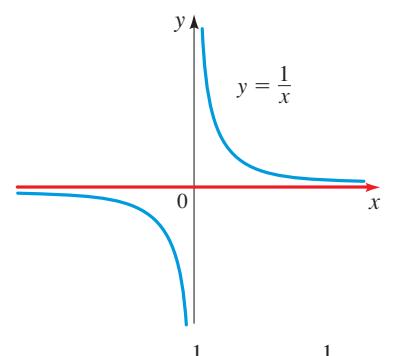
Find \(\operatorname*{lim}\limits_{x\rightarrow \infty} \dfrac{1}{x}\) and \(\operatorname*{lim}\limits_{x\rightarrow -\infty} \dfrac{1}{x}\).
question image
38 Example - Limit of a Rational Function at Infinity · Level 2
Evaluate \(\operatorname*{lim}\limits_{x\rightarrow \infty} \dfrac{3x^2 - x - 2}{5x^2 + 4x + 1}\).
question image
39 Example - Limit at Negative Infinity of e^x · Level 2
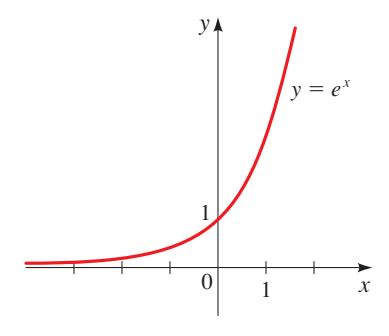
Use numerical and graphical methods to find \(\operatorname*{lim}\limits_{x\rightarrow -\infty} e^x\).
question image
40 Example - Function with No Limit at Infinity · Level 2
Evaluate \(\operatorname*{lim}\limits_{x\rightarrow \infty} \sin x\).
41 Example - Limit of a Sequence · Level 2
Find \(\operatorname*{lim}\limits_{n \rightarrow \infty} \dfrac{n}{n+1}\).
42 Example - Divergent Sequence · Level 2
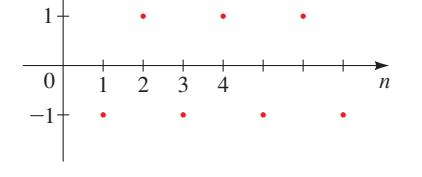
Determine whether the sequence \(a_n = (-1)^n\) is convergent or divergent.
question image
43 Example - Limit Using Sum Formula · Level 3
Find the limit of the sequence given by \(a_n = \dfrac{15}{n^3} (\dfrac{n(n+1)(2n+1)}{6})\).

Answered: 0 / 43