Stewart Precalc 6e Section 4.5: Exponential and Logarithmic Equations

21 questions

--:--
0 / 21
Stewart Precalc 6e Section 4.5: Exponential and Logarithmic Equations 0/21
1 Application - Doubling an Investment · Level 2
How long will it take for an investment of \$1000 to double in value if the interest rate is 8.5% per year, compounded continuously?
2 Application - Interest Rate · Level 3
A sum of \$1000 was invested for 4 years, and the interest was compounded semiannually. If this sum amounted to \$1435.77 in the given time, what was the interest rate?
3 Application - Radioactive Decay · Level 3
A 15-g sample of radioactive iodine decays in such a way that the mass remaining after \(t\) days is given by \(m(t) = 15 e^{-0.087 t}\), where \(m(t)\) is measured in grams. After how many days is there only 5 g remaining?
4 Application - Sky Diving · Level 3
The velocity of a sky diver \(t\) seconds after jumping is given by \(v(t) = 80(1 - e^{-0.2 t})\). After how many seconds is the velocity 70 ft/s?
5 Application - Fish Population · Level 3
A small lake is stocked with a certain species of fish. The fish population is modeled by the function \(P = \dfrac{10}{1 + 4 e^{-0.8 t}}\) where \(P\) is the number of fish in thousands and \(t\) is measured in years since the lake was stocked. (a) Find the fish population after 3 years. (b) After how many years will the fish population reach 5000 fish?
6 Application - Transparency of a Lake · Level 3
Environmental scientists measure the intensity of light at various depths in a lake to find the "transparency" of the water. Certain levels of transparency are required for the biodiversity of the submerged macrophyte population. In a certain lake the intensity of light at depth \(x\) is given by \(I = 10 e^{-0.008 x}\), where \(I\) is measured in lumens and \(x\) in feet. (a) Find the intensity \(I\) at a depth of 30 ft. (b) At what depth has the light intensity dropped to \(I = 5\)?
question image
7 Application - Atmospheric Pressure · Level 3
Atmospheric pressure \(P\) (in kilopascals, kPa) at altitude \(h\) (in kilometers, km) is governed by the formula \(\ln\left(\dfrac{P}{P_0}\right) = -\dfrac{h}{k}\) where \(k = 7\) and \(P_0 = 100\) kPa are constants. (a) Solve the equation for \(P\). (b) Use part (a) to find the pressure \(P\) at an altitude of 4 km.
8 Application - Cooling an Engine · Level 3
Suppose you're driving your car on a cold winter day (20 degree F outside) and the engine overheats (at about 220 degree F). When you park, the engine begins to cool down. The temperature \(T\) of the engine \(t\) minutes after you park satisfies the equation \(\ln\left(\dfrac{T - 20}{200}\right) = -0.11 t\). (a) Solve the equation for \(T\). (b) Use part (a) to find the temperature of the engine after 20 min \((t = 20)\).
9 Application - Electric Circuit · Level 4
An electric circuit contains a battery that produces a voltage of 60 volts (V), a resistor with a resistance of 13 ohms (\(\Omega\)), and an inductor with an inductance of 5 henrys (H), as shown in the figure. Using calculus, it can be shown that the current \(I = I(t)\) (in amperes, A) \(t\) seconds after the switch is closed is \(I = \dfrac{60}{13}(1 - e^{-13 t slash 5})\). (a) Use this equation to express the time \(t\) as a function of the current. (b) After how many seconds is the current 2 A?
question image
10 Application - Learning Curve · Level 4
A learning curve is a graph of a function \(P(t)\) that measures the performance of someone learning a skill as a function of the training time \(t\). At first, the rate of learning is rapid. Then, as performance increases and approaches a maximal value \(M\), the rate of learning decreases. It has been found that the function \(P(t) = M - C e^{-k t}\) where \(k\) and \(C\) are positive constants and \(C < M\) is a reasonable model for learning. (a) Express the learning time \(t\) as a function of the performance level \(P\). (b) For a pole-vaulter in training, the learning curve is given by \(P(t) = 20 - 14 e^{-0.024 t}\) where \(P(t)\) is the height he is able to pole-vault after \(t\) months. After how many months of training is he able to vault 12 ft?
question image
11 Discovery - Estimating a Solution · Level 4
Without actually solving the equation, find two whole numbers between which the solution of \(9^x = 20\) must lie. Do the same for \(9^x = 100\). Explain how you reached your conclusions.
12 Discovery - A Surprising Equation · Level 5
Take logarithms to show that the equation \(x^{1 slash \log x} = 5\) has no solution. For what values of \(k\) does the equation \(x^{1 slash \log x} = k\) have a solution? What does this tell us about the graph of the function \(f(x) = x^{1 slash \log x}\)? Confirm your answer using a graphing device.
13 Discovery - Disguised Equations · Level 5
Each of these equations can be transformed into an equation of linear or quadratic type by applying the hint. Solve each equation. (a) \((x - 1)^{\log(x - 1)} = 100(x - 1)\) [Take log of each side.] (b) \(\log_2 x + \log_4 x + \log_8 x = 11\) [Change all logs to base 2.] (c) \(4^x - 2^{x + 1} = 3\) [Write as a quadratic in \(2^x\).]
14 Example - Solving an Exponential Equation · Level 2
Find the solution of the equation \(3^{x + 2} = 7\), rounded to six decimal places.
15 Example - Solving an Exponential Equation · Level 2
Solve the equation \(8 e^{2 x} = 20\).
16 Example - Solving an Exponential Equation Algebraically and Graphically · Level 3
Solve the equation \(e^{3 - 2 x} = 4\) algebraically and graphically.
question image
17 Example - An Exponential Equation of Quadratic Type · Level 3
Solve the equation \(e^{2 x} - e^x - 6 = 0\).
18 Example - Solving an Exponential Equation by Factoring · Level 3
Solve the equation \(3 x e^x + x^2 e^x = 0\).
19 Example - Solving Logarithmic Equations · Level 2
Solve each equation for \(x\). *(a)* \(\ln x = 8\) *(b)* \(\log_2(25 - x) = 3\)
20 Example - Solving a Logarithmic Equation · Level 2
Solve the equation \(4 + 3 \log(2 x) = 16\).
21 Example - Solving a Logarithmic Equation Algebraically and Graphically · Level 3
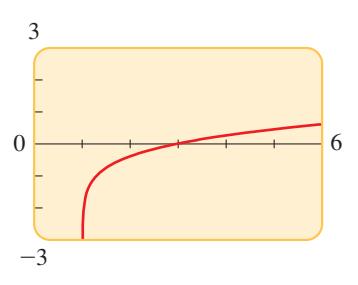
Solve the equation \(\log(x + 2) + \log(x - 1) = 1\) algebraically and graphically.
question image

Answered: 0 / 21