Stewart 9e Section 3.2: The Mean Value Theorem

45 questions

--:--
0 / 45
Stewart 9e Section 3.2: The Mean Value Theorem 0/45
1 Rolle's Theorem - Graphical Verification · Level 1
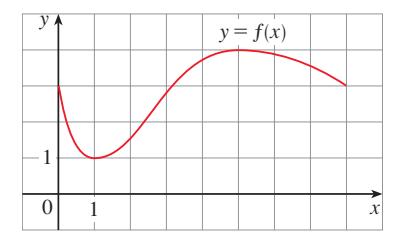
The graph of a function \(f\) is shown. Verify that \(f\) satisfies the hypotheses of Rolle's Theorem on the interval \([0, 8]\). Then estimate the value(s) of \(c\) that satisfy the conclusion of Rolle's Theorem on that interval.
question image
2 Rolle's Theorem - Counter-example Construction · Level 2
Draw the graph of a function defined on \([0, 8]\) such that \(f(0) = f(8) = 3\) and the function does not satisfy the conclusion of Rolle's Theorem on \([0, 8]\).
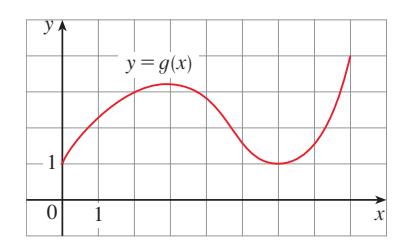
3 Mean Value Theorem - Graphical Estimation · Level 1
The graph of a function \(g\) is shown. (a) Verify that \(g\) satisfies the hypotheses of the Mean Value Theorem on the interval \([0, 8]\). (b) Estimate the value(s) of \(c\) that satisfy the conclusion of the Mean Value Theorem on the interval \([0, 8]\). (c) Estimate the value(s) of \(c\) that satisfy the conclusion of the Mean Value Theorem on the interval \([2, 6]\).
question image
4 Mean Value Theorem - Counter-example Construction · Level 2
Draw the graph of a function that is continuous on \([0, 8]\) where \(f(0) = 1\) and \(f(8) = 4\) and that does not satisfy the conclusion of the Mean Value Theorem on \([0, 8]\).
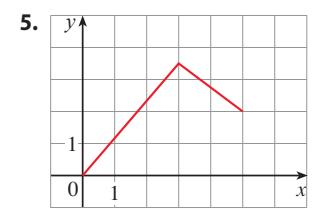
5 Mean Value Theorem - Graphical Verification · Level 1
The graph of a function \(f\) is shown. Does \(f\) satisfy the hypotheses of the Mean Value Theorem on the interval \([0, 5]\)? If so, find a value \(c\) that satisfies the conclusion of the Mean Value Theorem on that interval.
question image
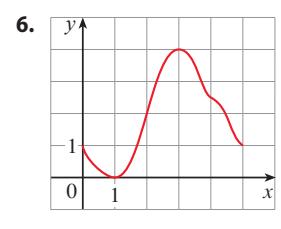
6 Mean Value Theorem - Graphical Verification · Level 1
The graph of a function \(f\) is shown. Does \(f\) satisfy the hypotheses of the Mean Value Theorem on the interval \([0, 5]\)? If so, find a value \(c\) that satisfies the conclusion of the Mean Value Theorem on that interval.
question image
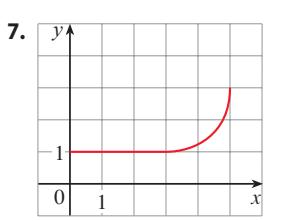
7 Mean Value Theorem - Graphical Verification · Level 1
The graph of a function \(f\) is shown. Does \(f\) satisfy the hypotheses of the Mean Value Theorem on the interval \([0, 5]\)? If so, find a value \(c\) that satisfies the conclusion of the Mean Value Theorem on that interval.
question image
8 Mean Value Theorem - Graphical Verification · Level 1
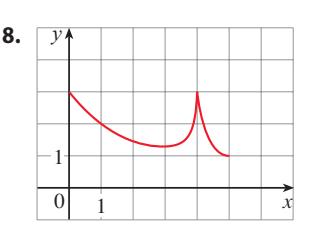
The graph of a function \(f\) is shown. Does \(f\) satisfy the hypotheses of the Mean Value Theorem on the interval \([0, 5]\)? If so, find a value \(c\) that satisfies the conclusion of the Mean Value Theorem on that interval.
question image
9 Rolle's Theorem - Polynomial · Level 2
Verify that the function \(f(x) = 2x^2 - 4x + 5\) satisfies the three hypotheses of Rolle's Theorem on the interval \([-1, 3]\). Then find all numbers \(c\) that satisfy the conclusion of Rolle's Theorem.
10 Rolle's Theorem - Cubic · Level 2
Verify that the function \(f(x) = x^3 - 2x^2 - 4x + 2\) satisfies the three hypotheses of Rolle's Theorem on the interval \([-2, 2]\). Then find all numbers \(c\) that satisfy the conclusion of Rolle's Theorem.
11 Rolle's Theorem - Trigonometric · Level 2
Verify that the function \(f(x) = \sin\left(\dfrac{x}{2}\right)\) satisfies the three hypotheses of Rolle's Theorem on the interval \([\dfrac{\pi}{2}, \dfrac{3\pi}{2}]\). Then find all numbers \(c\) that satisfy the conclusion of Rolle's Theorem.
12 Rolle's Theorem - Rational · Level 2
Verify that the function \(f(x) = x + \dfrac{1}{x}\) satisfies the three hypotheses of Rolle's Theorem on the interval \([\dfrac{1}{2}, 2]\). Then find all numbers \(c\) that satisfy the conclusion of Rolle's Theorem.
13 Rolle's Theorem - Hypothesis Failure · Level 2
Let \(f(x) = 1 - x^{\dfrac{2}{3}}\). Show that \(f(-1) = f(1)\) but there is no number \(c\) in \((-1, 1)\) such that \(f'(c) = 0\). Why does this not contradict Rolle's Theorem?
14 Rolle's Theorem - Hypothesis Failure · Level 2
Let \(f(x) = \tan x\). Show that \(f(0) = f(\pi)\) but there is no number \(c\) in \((0, \pi)\) such that \(f'(c) = 0\). Why does this not contradict Rolle's Theorem?
15 Mean Value Theorem - Polynomial · Level 2
Verify that the function \(f(x) = 2x^2 - 3x + 1\) satisfies the hypotheses of the Mean Value Theorem on the interval \([0, 2]\). Then find all numbers \(c\) that satisfy the conclusion of the Mean Value Theorem.
16 Mean Value Theorem - Cubic · Level 2
Verify that the function \(f(x) = x^3 - 3x + 2\) satisfies the hypotheses of the Mean Value Theorem on the interval \([-2, 2]\). Then find all numbers \(c\) that satisfy the conclusion of the Mean Value Theorem.
17 Mean Value Theorem - Root Function · Level 2
Verify that the function \(f(x) = \sqrt[3]{x}\) satisfies the hypotheses of the Mean Value Theorem on the interval \([0, 1]\). Then find all numbers \(c\) that satisfy the conclusion of the Mean Value Theorem.
18 Mean Value Theorem - Rational Function · Level 2
Verify that the function \(f(x) = \dfrac{1}{x}\) satisfies the hypotheses of the Mean Value Theorem on the interval \([1, 3]\). Then find all numbers \(c\) that satisfy the conclusion of the Mean Value Theorem.
19 Mean Value Theorem - Graphical Comparison · Level 2
Find the number \(c\) that satisfies the conclusion of the Mean Value Theorem on the given interval for \(f(x) = \sqrt{x}\), \([0, 4]\). Graph the function, the secant line through the endpoints, and the tangent line at \((c, f(c))\). Are the secant line and the tangent line parallel?
20 Mean Value Theorem - Graphical Comparison · Level 2
Find the number \(c\) that satisfies the conclusion of the Mean Value Theorem on the given interval for \(f(x) = x^3 - 2x\), \([-2, 2]\). Graph the function, the secant line through the endpoints, and the tangent line at \((c, f(c))\). Are the secant line and the tangent line parallel?
21 Mean Value Theorem - Hypothesis Failure · Level 2
Let \(f(x) = (x - 3)^{-2}\). Show that there is no value of \(c\) in \((1, 4)\) such that \(f(4) - f(1) = f'(c)(4 - 1)\). Why does this not contradict the Mean Value Theorem?
22 Mean Value Theorem - Hypothesis Failure · Level 2
Let \(f(x) = 2 - |2x - 1|\). Show that there is no value of \(c\) such that \(f(3) - f(0) = f'(c)(3 - 0)\). Why does this not contradict the Mean Value Theorem?
23 Existence and Uniqueness of Roots · Level 3
Show that the equation \(2x + \cos x = 0\) has exactly one real solution.
24 Existence and Uniqueness of Roots · Level 3
Show that the equation \(2x - 1 - \sin x = 0\) has exactly one real solution.
25 Uniqueness of Solutions in Interval · Level 3
Show that the equation \(x^3 - 15x + c = 0\) has at most one solution in the interval \([-2, 2]\).
26 Bounding Number of Real Solutions · Level 3
Show that the equation \(x^4 + 4x + c = 0\) has at most two real solutions.
27 Polynomial Zeros via Rolle's Theorem · Level 3
(a) Show that a polynomial of degree 3 has at most three real zeros. (b) Show that a polynomial of degree \(n\) has at most \(n\) real zeros.
28 Derivatives and Zeros via Rolle's Theorem · Level 3
(a) Suppose that \(f\) is differentiable on \(RR\) and has two zeros. Show that \(f'\) has at least one zero. (b) Suppose \(f\) is twice differentiable on \(RR\) and has three zeros. Show that \(f''\) has at least one real zero. (c) Can you generalize parts (a) and (b)?
29 Bounds via Mean Value Theorem · Level 2
If \(f(1) = 10\) and \(f'(x) \geq 2\) for \(1 \leq x \leq 4\), how small can \(f(4)\) possibly be?
30 Bounds via Mean Value Theorem · Level 2
Suppose that \(3 \leq f'(x) \leq 5\) for all values of \(x\). Show that \(18 \leq f(8) - f(2) \leq 30\).
31 Existence of Function via MVT · Level 2
Does there exist a function \(f\) such that \(f(0) = -1\), \(f(2) = 4\), and \(f'(x) \leq 2\) for all \(x\)?
32 Comparison Theorem via MVT · Level 3
Suppose that \(f\) and \(g\) are continuous on \([a, b]\) and differentiable on \((a, b)\). Suppose also that \(f(a) = g(a)\) and \(f'(x) < g'(x)\) for \(a < x < b\). Prove that \(f(b) < g(b)\). (Hint: Apply the Mean Value Theorem to the function \(h = f - g\).)
33 Trigonometric Inequality via MVT · Level 3
Show that \(\sin x < x\) if \(0 < x < 2 \pi\).
34 Odd Functions and MVT · Level 3
Suppose \(f\) is an odd function and is differentiable everywhere. Prove that for every positive number \(b\), there exists a number \(c\) in \((-b, b)\) such that \(f'(c) = f(b)/b\).
35 Lipschitz Inequality via MVT · Level 2
Use the Mean Value Theorem to prove the inequality \(|\sin a - \sin b| \leq |a - b|\) for all \(a\) and \(b\).
36 Corollary 7 - Constant Derivative · Level 3
If \(f'(x) = c\) (\(c\) a constant) for all \(x\), use Corollary 7 to show that \(f(x) = c x + d\) for some constant \(d\).
37 Corollary 7 - Domain Restriction · Level 3
Let \(f(x) = \dfrac{1}{x}\) and \(g(x) = \begin{cases} \dfrac{1}{x} & \quad \text{if } x > 0 \\ 1 + \dfrac{1}{x} & \quad \text{if } x < 0 \end{cases}\). Show that \(f'(x) = g'(x)\) for all \(x\) in their domains. Can we conclude from Corollary 7 that \(f - g\) is constant?
38 MVT - Acceleration Application · Level 2
At 2:00 pm a car's speedometer reads 30 mi/h. At 2:10 pm it reads 50 mi/h. Show that at some time between 2:00 and 2:10 the acceleration is exactly \(120\) mi/h\(^2\).
39 Rolle's Theorem - Race Application · Level 3
Two runners start a race at the same time and finish in a tie. Prove that at some time during the race they have the same speed. (Hint: Consider \(f(t) = g(t) - h(t)\), where \(g\) and \(h\) are the position functions of the two runners.)
40 Fixed Points and MVT · Level 3
A number \(a\) is called a fixed point of a function \(f\) if \(f(a) = a\). Prove that if \(f'(x) \neq 1\) for all real numbers \(x\), then \(f\) has at most one fixed point.
41 Example - Rolle's Theorem Applied to Position · Level 2
Apply Rolle's Theorem to the position function \(s = f(t)\) of a moving object. If the object is in the same place at two different instants \(t = a\) and \(t = b\), so that \(f(a) = f(b)\), what does Rolle's Theorem tell us about the velocity?
42 Example - Uniqueness of Solution via Rolle's Theorem · Level 3
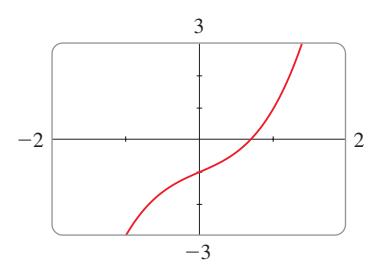
Prove that the equation \(x^3 + x - 1 = 0\) has exactly one real solution.
question image
43 Example - Mean Value Theorem Verification · Level 2
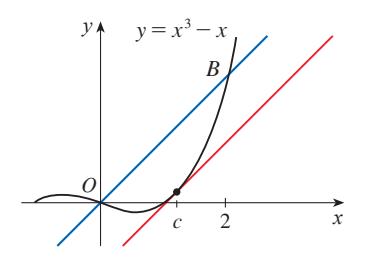
Let \(f(x) = x^3 - x\), \(a = 0\), \(b = 2\). Verify that \(f\) satisfies the hypotheses of the Mean Value Theorem on \([0, 2]\) and find the number \(c\) guaranteed by the theorem.
question image
44 Example - Velocity Interpretation of MVT · Level 2
If an object moves in a straight line with position function \(s = f(t)\), use the Mean Value Theorem to show that at some time between \(t = a\) and \(t = b\), the instantaneous velocity equals the average velocity over \([a, b]\).
45 Example - Bound Using MVT · Level 2
Suppose that \(f(0) = -3\) and \(f'(x) \leq 5\) for all values of \(x\). How large can \(f(2)\) possibly be?

Answered: 0 / 45